


What Is a Real Estate Purchase Agreement?
Selling a home isn’t like placing an ad in the newspaper to try to get someone to buy your old exercise equipment. In addition to the large amounts of cash and credit usually involved in a real estate purchase, the process is one that is absolutely fraught with legal considerations. Buyers and sellers put a lot on the line when they enter into a real estate transaction which is why having a real estate purchase agreement in place is essential to protect both parties.”
And perhaps the most important house contract is the real estate purchase agreement.
As part of our Beginner’s Guide for Home Sellers, we discuss the real estate purchase agreement — what it is, what it includes, and what you need to know about it to help safeguard your home sale.
What Is a Purchase Agreement?
A purchase agreement is a legally binding contract between the seller and the buyer of a property. A purchase agreement (also sometimes called a purchase contract, real estate sales contract, or purchase and sale agreement) clearly and precisely defines the terms of the transaction and the conditions of the sale.
The purchase agreement comes into play when a buyer makes an offer on the purchase of a home. The buyer will provide important details of their offer (such as the offer price) as well as any other proposed conditions of the sale they may wish to include. The seller can then accept, reject, or renegotiate those terms and conditions if they so wish.
Once both parties are satisfied with the terms of the purchase agreement, they sign the contract. This places the buyer, the seller, and the property legally ‘under contract,’ meaning that if and when all of the conditions of the agreement are met, the sale will close and property ownership will transfer from the seller to the buyer.
A signed purchase agreement is a legal representation of the intent of both parties to engage in the real estate transaction, and stipulates the circumstances that must be met for the transaction to be completed.
Who Prepares the Purchase Agreement?
Traditionally, the buyer’s real estate agent takes responsibility for working with real-estate law firms to write up and prepare the purchase agreement.
Alternatively, buyers and sellers who do not use real estate agents may wish to write their own real estate purchase contracts. To help ensure that your purchase agreement is legally airtight and that it fully details every aspect of your sale agreement, it’s advisable that you work with a real-estate attorney. They will be able to help you draft a purchase agreement for your house, and ensure that you fully understand the terms and expectations to be included in the contract.
What Are the Different Parts of a Purchase Agreement?
The real estate purchase agreement must be able to stand up to legal scrutiny and account for many different factors and circumstances. Common components within purchase agreements include the following:
The above examples are only some of the contingencies that may be included in a purchase agreement. Make sure that you are completely familiar with every contingency included in your contract before you make any formal commitment, so you understand what circumstances might legally prevent the sale from closing.
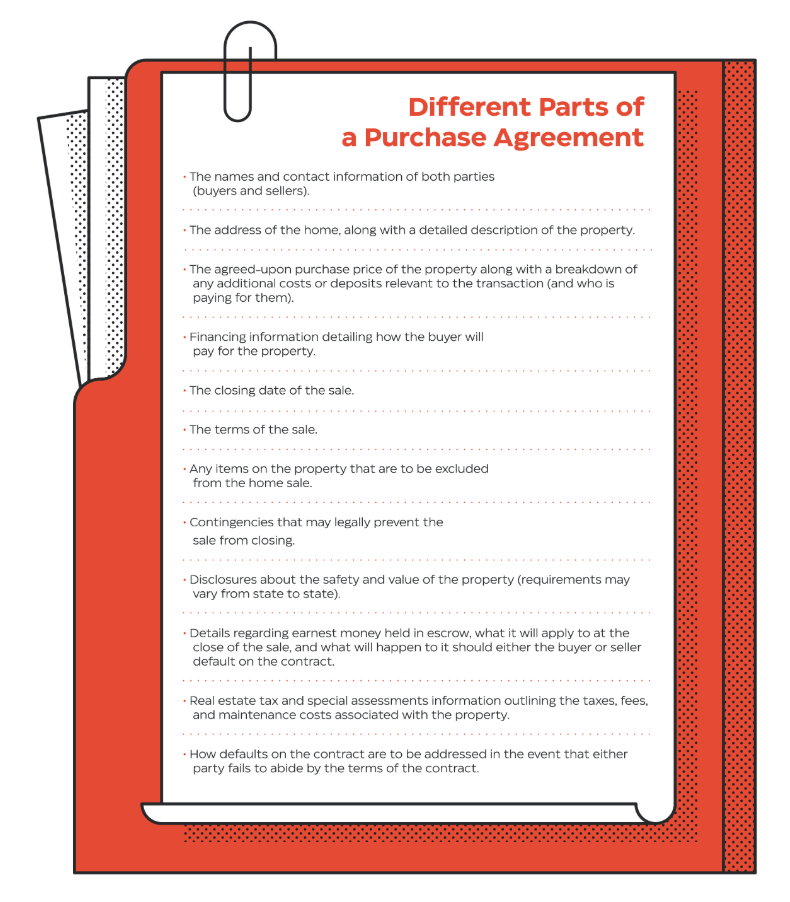
What Are the Different Parts of a Purchase Agreement?
A real estate purchase agreement contains several key pieces of information that clearly define the terms of the transaction and help protect both the buyer and the seller. While the exact structure of a purchase agreement can vary depending on the state and the specific transaction, most contracts include many of the same core elements.
The Names and Contact Information of Both Parties
The purchase agreement identifies both parties involved in the sale, including the names and contact information of the buyer and the seller. Clearly identifying the individuals or entities entering the contract ensures that each party is legally accountable for fulfilling the terms of the agreement.
The Address and Description of the Property
The agreement also includes the address of the property and a detailed description of the home. This ensures there is no confusion about which property is being transferred and provides a clear legal reference for the transaction.
The Agreed-Upon Purchase Price and Associated Costs
A purchase agreement outlines the agreed-upon purchase price of the property. It may also include a breakdown of any deposits, fees, or additional costs related to the transaction, along with clarification about which party is responsible for paying them.
Financing Information
The contract typically includes financing details explaining how the buyer plans to pay for the property. This may involve a mortgage loan, a cash purchase, or another financing arrangement that must be secured before the transaction can close.
The Closing Date
Another important component is the closing date. This establishes when the transaction is expected to be finalized and when ownership of the property will officially transfer from the seller to the buyer.
The Terms of the Sale
The agreement also outlines the specific terms of the sale. These terms include any negotiated conditions that both parties must meet before the sale can move forward and be completed.
Items Excluded From the Sale
Purchase agreements often specify which items will remain with the home and which will be excluded from the sale. For example, certain appliances, fixtures, or personal property may be listed as items the seller intends to remove before closing.
Contingencies That May Prevent the Sale From Closing
Most purchase agreements include contingencies. These clauses outline conditions that must be met for the transaction to proceed and protect both parties if certain requirements—such as financing approval or inspections—are not satisfied.
Property Disclosures
Property disclosures provide information about the safety, condition, and value of the home. Disclosure requirements vary by state, but they help ensure buyers are informed about any known issues with the property before completing the purchase.
Earnest Money Details
Another important section of a purchase agreement explains earnest money. This includes how the deposit will be held in escrow, how it will be applied at closing, and what happens to it if either party defaults on the contract.
Property Taxes, Assessments, and Maintenance Costs
The contract may also outline real estate taxes, special assessments, and other ownership-related costs associated with the property. These details help clarify which expenses must be addressed as part of the transaction.
How Contract Defaults Are Handled
Finally, the purchase agreement explains how defaults on the contract will be handled if either the buyer or seller fails to meet the agreed-upon terms. This section outlines the potential consequences and legal remedies available to the affected party.
Together, these elements create a clear framework for the transaction and help ensure that both parties understand their responsibilities before the sale moves forward.
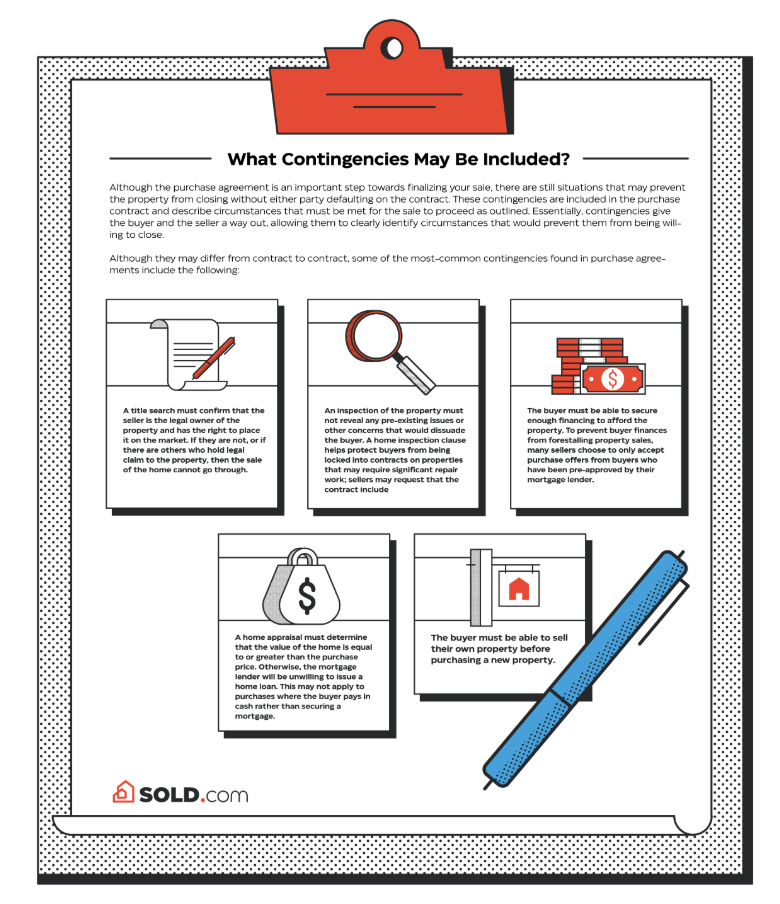
What Contingencies May Be Included?
Although the purchase agreement is an important step towards finalizing your sale, there are still situations that may prevent the property from closing without either party defaulting on the contract. These contingencies are included in the purchase contract and describe circumstances that must be met for the sale to proceed as outlined. Essentially, contingencies give the buyer and the seller a way out, allowing them to clearly identify circumstances that would prevent them from being willing to close.
Although they may differ from contract to contract, some of the most common contingencies found in purchase agreements include the following:
Title Search Contingency
A title search must confirm that the seller is the legal owner of the property and has the right to place it on the market. If they are not, or if there are others who hold legal claim to the property, then the sale of the home cannot go through.
Home Inspection Contingency
An inspection of the property must not reveal any pre-existing issues or other concerns that would discourage the buyer. A home inspection clause helps protect buyers from being locked into contracts on properties that may require significant repair work; sellers may request that the contract include.
Financing Contingency
The buyer must be able to secure enough financing to afford the property. To prevent buyer finances from forestalling property sales, many sellers choose to only accept purchase offers from buyers who have been pre-approved by their mortgage lender.
Appraisal Contingency
A home appraisal must determine that the value of the home is equal to or greater than the purchase price. Otherwise, the mortgage lender will be unwilling to issue a home loan. This may not apply to purchases where the buyer pays in cash rather than securing a mortgage.
Home Sale Contingency
The buyer must be able to sell their own property before purchasing a new property.
The above examples are only some of the contingencies that may be included in a purchase agreement. Make sure that you are completely familiar with every contingency included in your contract before you make any formal commitment, so you understand what circumstances might legally prevent the sale from closing.
Is It Possible to Cancel a Purchase Agreement?
It is possible to cancel a purchase agreement, but it can be costly. The contingencies included in the contract are the only truly safe options for backing out of a purchase agreement — if one or more of those contingencies are not met, the contract is void and both parties are freed from their obligations. If, on the other hand, you decide to exit a purchase agreement when the option to do so is not protected by the contract, you may incur legal or monetary penalties.
Simply put, once the contract has been signed and the terms have been met, the buyer has a legal claim on the property. They may then sue the seller to force them to complete the transaction, or they might file a lis pendens, or a lien, on the home, preventing the seller from selling the property to anyone else. At the very least, failing to satisfy your responsibilities as outlined in the purchase agreement will end up costing you time, effort, and the earnest money currently held in escrow, and place you back at square one of trying to sell your home.
In nearly every case, the best time to cancel a purchase agreement is before you ever sign it. After you’ve made a legal commitment, getting out is much more difficult. Instead, make sure that you fully understand the contract, your responsibilities, and your options, so you can go through the selling process with confidence.
We Can Help You Navigate the Selling Process
Selling a home is probably one of the most complex and legally significant transactions you will ever be involved in. But that doesn’t mean it needs to be a stressful experience. Sold.com has the insights, resources, and expertise to help you navigate the stormy seas of selling your property. Take our quiz today , and see what home selling options (and savings) are waiting for you!


